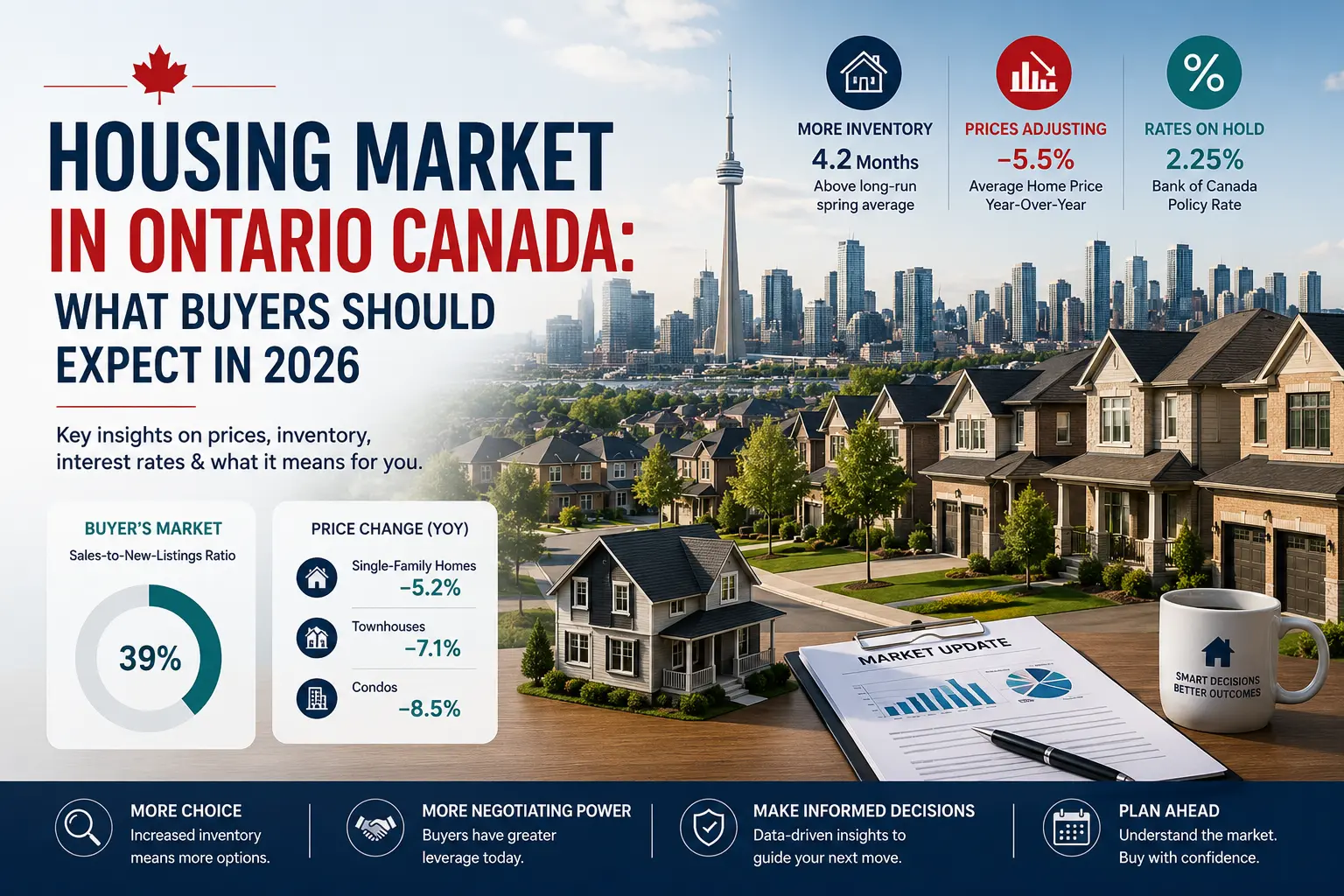
Interest Rate Cut Canada discussions have become one of the biggest topics among home buyers. Many Canadians are delaying purchases while waiting for lower rates, but the real question is whether waiting will actually save money once rising home prices are factored into the equation.
Waiting feels logical. Rates are still elevated relative to pre-2022 norms, and the Bank of Canada has already signaled a pause in its cutting cycle. So why rush?
The problem is that this calculation usually ignores what the other side of the equation is doing. While you wait for borrowing costs to fall, home prices tend to respond to those same rate cuts — often faster than buyers expect. By the time rates drop meaningfully, the home you were watching may cost noticeably more than it does today.
This post walks through the actual math, the risks of waiting, and a set of clear criteria to help you decide which move makes more sense for your situation.
Why So Many Buyers Are Sitting on the Sidelines
Rate anxiety has become a defining feature of the Canadian housing market over the past two years. After the Bank of Canada raised its overnight rate to 5.0% in June 2023 — the highest level in over two decades — many prospective buyers paused their searches and waited for relief.
That relief came. The Bank of Canada cut rates seven times between June 2024 and January 2025, bringing the overnight rate down to 3.00%. By April 2025 it stood at 2.75%, and by June 2026 the rate had settled at 2.25% — a full 275 basis points below the 2023 peak (Bank of Canada, 2026).
For buyers who waited through that entire cutting cycle, the savings on borrowing costs were real. But the homes they were watching didn’t stand still either.
The Risk in Waiting: Prices Don’t Wait for You
Rate cuts carry a well-documented side effect: they tend to stimulate demand, and demand pushes prices up.
Canada’s national average home price offers a clear illustration. According to WOWA’s May 2026 housing report, the national average reached $695,412 in April 2026 — up 2.2% year-over-year. That followed a period where prices had already begun recovering from the 2022–2023 correction. The CREA 2026 quarterly forecast puts Ontario’s average home price at $835,467 for 2025, and projects further activity growth in 2026 with national sales rising approximately 1% year-over-year.
The core dynamic is this: lower rates increase what buyers can qualify for, which increases competition, which pushes prices up. A buyer who waits to benefit from a 0.25% rate cut may find that the same home costs $20,000–$40,000 more by the time they act — and that price increase is permanent, while the rate can always be refinanced later.
What Actually Moves the Needle on Affordability?
Both prices and rates affect your monthly payment, but they don’t affect it equally — and they don’t move in sync.
When the Bank of Canada cuts its overnight rate, variable mortgage rates and prime rate shift almost immediately. Fixed rates, however, are tied to Government of Canada bond yields, which move on their own schedule based on inflation expectations and economic data. A Bank of Canada cut doesn’t automatically translate into a lower fixed rate on your mortgage.
Home prices, by contrast, respond to the broader confidence effect of rate cuts — often within months of an announcement, especially in supply-constrained markets like Toronto and Vancouver.
The practical implication: if you’re shopping in a high-demand area and waiting for fixed rates to fall before acting, you may find that prices have already absorbed the benefit you were waiting for.
Rate Drop vs. Price Increase: Which Costs More?
Here’s a concrete comparison to anchor the decision.
Suppose you’re looking at a home priced at $700,000 today, with a 20% down payment ($140,000) and a mortgage of $560,000.
- At a 5-year fixed rate of 4.50%, your monthly payment on a 25-year amortization is approximately $3,053.
- If you wait six months and the rate falls to 4.25%, your monthly payment drops to roughly $2,990 — a saving of about $63/month.
Now suppose that same home, in a market responding to improved buyer confidence, is priced at $730,000 six months later. Your mortgage increases to $584,000.
- At the lower 4.25% rate, your monthly payment on the larger mortgage is approximately $3,121 — $68 more per month than what you would have paid today, despite the lower rate.
Over a 25-year amortization, the higher purchase price more than erases the rate benefit. This is the core trade-off most buyers underestimate.
Two Scenarios: When Waiting Makes Sense, and When It Doesn’t
Waiting may make sense if:
- Your finances need more time — you’re building your down payment, stabilizing your income, or clearing debt before applying.
- The market you’re buying in is soft or declining, and inventory is rising faster than sales.
- You’re targeting a property type (such as condos in oversupplied urban markets) where price softness is more likely to persist.
- Your timeline is flexible enough to weather multiple interest rate announcement cycles without lifestyle cost.
Buying now may make sense if:
- You’re financially ready — your down payment is in place, your debt ratios are healthy, and you have stable employment.
- You’re buying in a market where supply is constrained and demand recovers quickly in response to rate changes.
- You plan to hold the property for five or more years, which gives you time to refinance when rates move and to ride out short-term price fluctuations.
- Further rate cuts are already priced into market expectations, meaning the stimulative effect on prices may arrive before the rate change itself does.
The CREA forecast and current market data suggest Canada’s housing market is adjusting rather than collapsing. National conditions in early 2026 remain broadly balanced, but signs of recovering momentum — particularly in April and May 2026 sales data — indicate that buyer confidence is beginning to return. Buyers who wait for certainty may find themselves entering a more competitive market than the one they left.
Strategic Advice: How to Think Through Your Own Decision
No general rule will be right for every buyer. Here’s a structured way to think through your specific situation.
1. Run your own rate vs. price sensitivity analysis. Ask a mortgage professional to model what a 0.25% rate cut saves you monthly against a 2–5% price increase on the home you’re targeting. The numbers will vary significantly by market and price point.
2. Assess your local market’s supply dynamics. In markets where listings are rising and sales-to-new-listings ratios are weak, price pressure is lower. In tight markets, even modest rate cuts can reignite competition quickly.
3. Don’t treat the Bank of Canada’s rate as a proxy for your mortgage rate. The Bank of Canada’s overnight rate held at 2.25% through five consecutive meetings in 2026 (Bank of Canada, June 2026). Fixed mortgage rates, tied to bond yields, may not follow the same path or timing.
4. Factor in the cost of renting while you wait. Every month you delay, you’re likely paying rent — which builds no equity and may be increasing in its own right. The true cost of waiting isn’t zero.
When a Mortgage Expert Can Help You Decide
The buy-now-or-wait question has a different answer for a first-time buyer with a $50,000 down payment than it does for someone trading up from an existing property. A mortgage professional can run scenario-specific numbers — your income, your target price range, your local market — and give you a clearer picture of what each path actually costs.
That conversation is most valuable before you’ve made up your mind, not after. It’s the difference between making a decision based on what rates are doing nationally and making one based on what your mortgage will actually cost.
The Honest Answer on Timing the Market
Timing the housing market is genuinely difficult. Rates, prices, inventory, and economic confidence move on different timelines and don’t always point in the same direction.
What the data from Canada’s most recent rate-cutting cycle makes clear is this: waiting for lower rates while ignoring what prices are doing in the interim is not a conservative strategy. For buyers who are financially ready and buying in a supply-constrained market, the cost of waiting has — in many cases — exceeded the cost of borrowing at today’s rates.
If you’re not financially ready, waiting is the right call. But if your finances are in order and you’re holding back purely for rate relief, it’s worth doing the math on what that wait is actually costing you.
FAQ
Has the Bank of Canada finished cutting interest rates?
As of June 2026, the Bank of Canada’s overnight rate sits at 2.25% — held steady through five consecutive meetings (Bank of Canada, June 2026). Market expectations suggest rates will hold at this level through much of 2026, with no further cuts currently forecast. That said, the Bank’s decisions are data-dependent and can shift in response to inflation or employment changes.
Do Bank of Canada rate cuts automatically lower mortgage rates?
No. The Bank of Canada’s overnight rate directly influences variable mortgage rates and the prime rate. Fixed mortgage rates are tied to Government of Canada bond yields, which move independently. A rate cut from the Bank of Canada can lower variable rates immediately while fixed rates remain unchanged or move in the opposite direction.
Are Canadian home prices falling in 2026?
National averages have stabilized rather than fallen. WOWA’s May 2026 report places the national average home price at $695,412 — up 2.2% year-over-year. CREA’s 2026 forecast projects Ontario’s average at $835,467, with modest national sales growth of approximately 1%. Regional variation is significant; some markets remain soft while others are recovering.
Is it better to buy now or wait for interest rates to drop further?
For financially ready buyers in supply-constrained markets, buying now typically makes more sense than waiting. Rate cuts tend to lift prices, often offsetting borrowing cost savings. For buyers who need more time to build a down payment or stabilize their financial position, waiting is the right decision regardless of where rates are headed.
How much does a 0.25% rate cut actually save on a mortgage?
On a $560,000 mortgage with a 25-year amortization, a 0.25% rate reduction saves approximately $63–$75 per month, depending on the starting rate. Over five years, that amounts to roughly $3,780–$4,500 in total savings — an amount that can be quickly erased by a 1–2% increase in the purchase price of the home.
When does it make sense to speak with a mortgage professional?
Before you’ve decided whether to buy. A mortgage professional can model your specific numbers — income, down payment, local market prices, and current rate options — and quantify the real cost of buying now versus waiting. That analysis is specific to your situation in a way that general market commentary cannot be.
Link