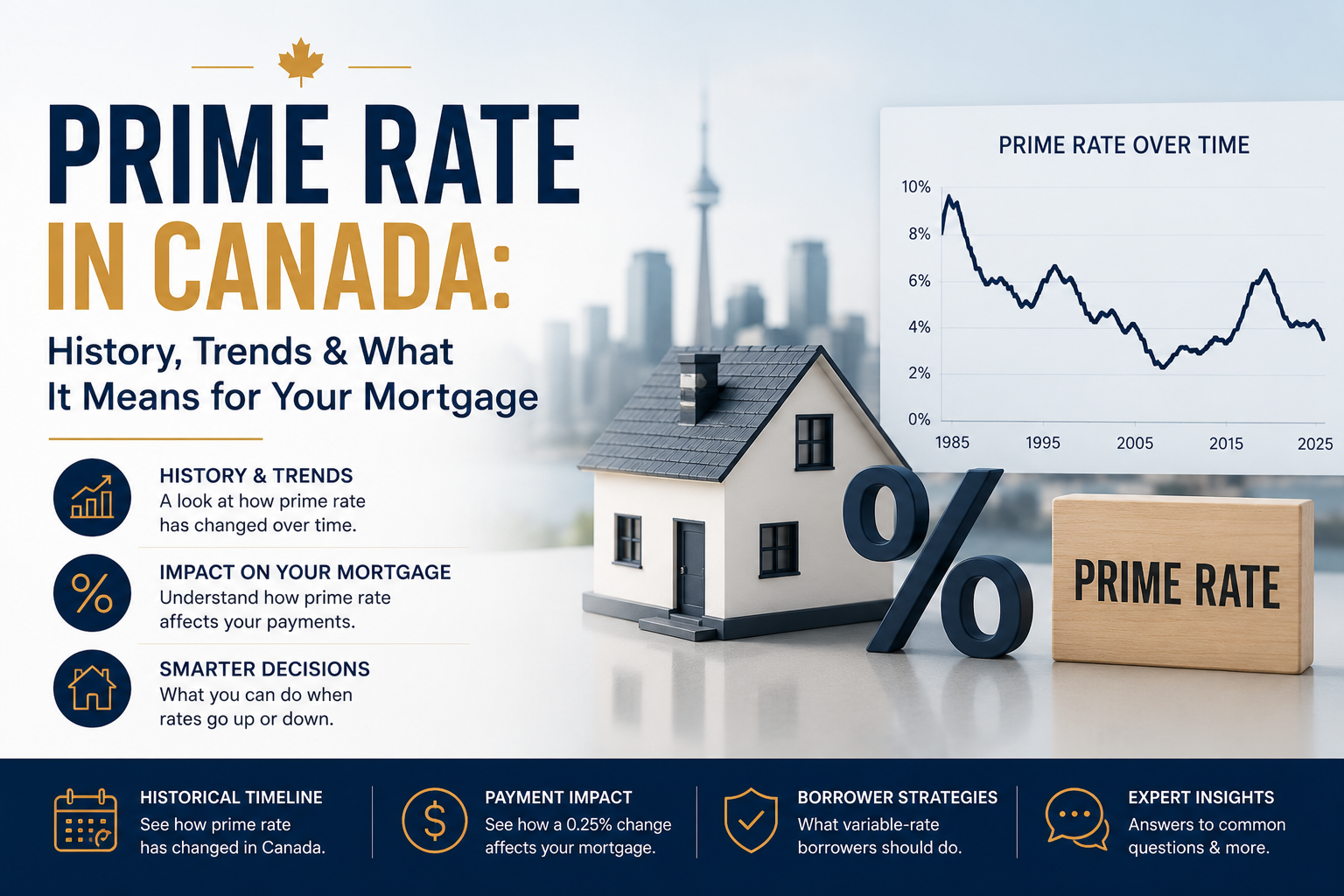
A Canada interest rate cut can directly impact mortgage payments, borrowing power, refinancing opportunities, and overall housing affordability for Canadian homeowners and buyers.
For borrowers, rate cuts can create opportunities. But they also create confusion. Many Canadians assume a rate cut automatically means dramatically cheaper mortgages, lower monthly payments, or that home prices will suddenly surge overnight. The reality is more nuanced.
Here’s what Canadians need to know about interest rate cuts, how they affect mortgages, and what borrowers should consider next.
What Does a Canada Interest Rate Cut Mean?
A rate cut happens when the Bank of Canada lowers its target overnight lending rate.
This is the benchmark interest rate that influences how much banks charge each other to borrow money overnight. While consumers don’t borrow directly at this rate, it heavily impacts:
- Variable mortgage rates
- Lines of credit
- Prime lending rates
- HELOCs
- Business loans
- Savings account returns
When the Bank of Canada cuts rates, lenders often reduce their prime rate shortly afterward. This is why variable-rate mortgage borrowers usually feel the impact first.
Fixed mortgage rates, however, work differently. They’re primarily influenced by Government of Canada bond yields — not directly by the Bank of Canada’s overnight rate.
Why Does the Bank of Canada Cut Interest Rates?
Interest rate cuts are usually designed to stimulate the economy.
When economic growth slows, inflation cools, or unemployment rises, the central bank may reduce rates to encourage:
- Consumer spending
- Home buying
- Business investment
- Borrowing activity
Lower borrowing costs make debt cheaper, which can help boost economic activity.
In recent years, Canadians have experienced aggressive rate increases to fight inflation. Once inflation begins stabilizing closer to the Bank of Canada’s target range, policymakers may shift toward rate cuts to support economic growth again.
But here’s the important part many borrowers misunderstand:
A rate-cut cycle does not automatically mean mortgage rates will crash back to pandemic-era lows. Central banks move cautiously, and inflation risks still matter.
How a Canada Interest Rate Cut Affects Mortgages
The immediate impact depends on the type of mortgage you have.
Variable-rate mortgages
Variable-rate borrowers usually see the fastest effect after a Bank of Canada rate cut.
If your lender lowers its prime rate:
- Your interest costs decrease
- More of your payment goes toward principal
- Some borrowers may see lower monthly payments
This depends on whether you have:
- Adjustable-rate mortgages (payment changes immediately)
- Static-payment variable mortgages (payment stays same, amortization changes)
For adjustable-rate borrowers, payment relief can happen fairly quickly after a rate cut.
Fixed-rate mortgages
Fixed mortgage rates are tied more closely to bond market movements.
Sometimes:
- Fixed rates fall before the Bank of Canada cuts rates
- Or fixed rates rise even while the Bank cuts rates
Why?
Because bond markets price in expectations ahead of time. If investors expect inflation to remain stubborn or economic uncertainty to rise, bond yields can increase — pushing fixed mortgage rates higher.
This is why many Canadians get confused when headlines mention “rate cuts,” but fixed mortgage rates barely move.
Example: How a recent rate cut affects a typical mortgage
Let’s say a homeowner has:
- $600,000 mortgage balance
- 25-year amortization
- Variable mortgage rate
If the lender reduces rates by 0.25%, the monthly payment savings could look roughly like this:
| Mortgage Balance | Rate Reduction | Estimated Monthly Savings |
|---|---|---|
| $600,000 | 0.25% | ~$75–$90/month |
That’s approximately:
- $900–$1,080 annually
- Depending on amortization and lender structure
For borrowers already stretched by higher mortgage costs, even small cuts can improve monthly cash flow.
But borrowers expecting dramatic payment reductions after one cut are usually unrealistic. Meaningful relief generally requires multiple cuts over time.
Fixed vs. variable borrowers: who benefits more?
Variable-rate borrowers
Usually benefit first during a rate-cut cycle because:
- Payments may decrease
- Interest costs drop
- Cash flow improves faster
However, they also took the biggest hit during rate hikes.
Fixed-rate borrowers
Benefits are slower and less predictable.
If bond yields fall:
- Fixed mortgage rates may decrease
- Renewal opportunities may improve
- Refinancing could become more attractive
But there’s no guarantee fixed rates will fall aggressively, even during multiple Bank of Canada cuts.
Should You Refinance After a Canada Interest Rate Cut?
A rate cut shouldn’t automatically trigger panic refinancing or impulsive decisions.
Instead, borrowers should reassess their overall mortgage strategy.
1. Review your renewal timeline
If your mortgage renews within:
- 6–12 months
- Watch both fixed and variable trends carefully
Markets often move before official Bank announcements.
2. Evaluate your debt situation
Lower rates can improve affordability, but this isn’t permission to overload yourself with debt.
Many Canadians made this mistake during ultra-low-rate periods.
Just because you qualify for more borrowing doesn’t mean you should take it.
3. Compare refinance opportunities carefully
Refinancing may help if you want to:
- Consolidate higher-interest debt
- Access equity
- Improve monthly cash flow
But refinancing also comes with:
- Penalties
- Legal fees
- Potentially restarting amortization
The math needs to make sense — not just the headline rate.
4. Don’t assume rates will keep falling forever
One of the biggest mistakes borrowers make is trying to perfectly time the market.
Nobody consistently predicts:
- Inflation
- Bond markets
- Central bank decisions
Waiting endlessly for “better rates” can backfire if home prices rise or bond yields reverse higher.
Common Misconceptions About a Canada Interest Rate Cut
“A rate cut means all mortgages become cheaper immediately”
False.
Variable mortgages usually react faster. Fixed rates depend heavily on bond markets.
“The Bank of Canada controls fixed mortgage rates”
Not directly.
Bond yields influence fixed mortgage pricing much more than overnight rates.
“Rate cuts always boost housing prices instantly”
Not necessarily.
Housing markets also depend on:
- Inventory
- Employment
- Immigration
- Consumer confidence
- Local supply conditions
“I should always switch to variable when rates are falling”
Not always.
Variable can save money during declining-rate environments, but borrowers still need:
- Payment flexibility
- Risk tolerance
- Financial stability
Many Canadians underestimate how stressful payment volatility can feel.
What Canadian Borrowers Should Do Next
There’s no universal answer. It depends on:
- Your renewal date
- Debt levels
- Cash flow
- Risk tolerance
- Long-term plans
Renewing may make sense if:
- You want payment stability
- You prefer predictable budgeting
- You’re risk-averse
Refinancing may make sense if:
- You have high-interest debt
- You need equity access
- The savings outweigh penalties
Waiting may make sense if:
- Your renewal is far away
- Bond yields are still volatile
- You expect better options later
But waiting purely because you think rates will “definitely crash” is speculation — not strategy.
Canada Interest Rate Cut FAQs
Will mortgage payments automatically decrease after a rate cut?
Only some variable-rate borrowers see immediate payment reductions. Fixed-rate borrowers usually won’t notice changes until renewal or refinancing.
Are fixed mortgage rates expected to fall in Canada?
Fixed rates may decline if bond yields continue easing, but they can remain volatile depending on inflation and economic conditions.
Is variable better than fixed during rate cuts?
Variable mortgages often benefit more during falling-rate environments, but they also carry greater uncertainty and payment risk.
Should I refinance after a rate cut?
Only if the financial savings outweigh the penalties and costs involved.
How many rate cuts are expected in Canada?
That depends on inflation, economic growth, employment data, and global market conditions. The Bank of Canada adjusts policy based on incoming economic data — not predetermined timelines.
Final thoughts
Interest rate cuts can improve affordability and create opportunities for Canadian borrowers — but they’re not a magic reset button for the housing market.
The borrowers who usually benefit most are the ones who:
- Understand how mortgage pricing actually works
- Avoid emotional decisions
- Focus on long-term affordability instead of short-term headlines
Whether you’re renewing, refinancing, buying, or simply trying to reduce your monthly costs, the smartest move is usually building a mortgage strategy around your financial reality — not market hype.
Content inspiration and tone reference reviewed from uploaded Ratehub writing samples
Important Info
Fixed vs Variable Mortgage
First-Time Home Buyer Guide
Bank of Canada