Table of Contents
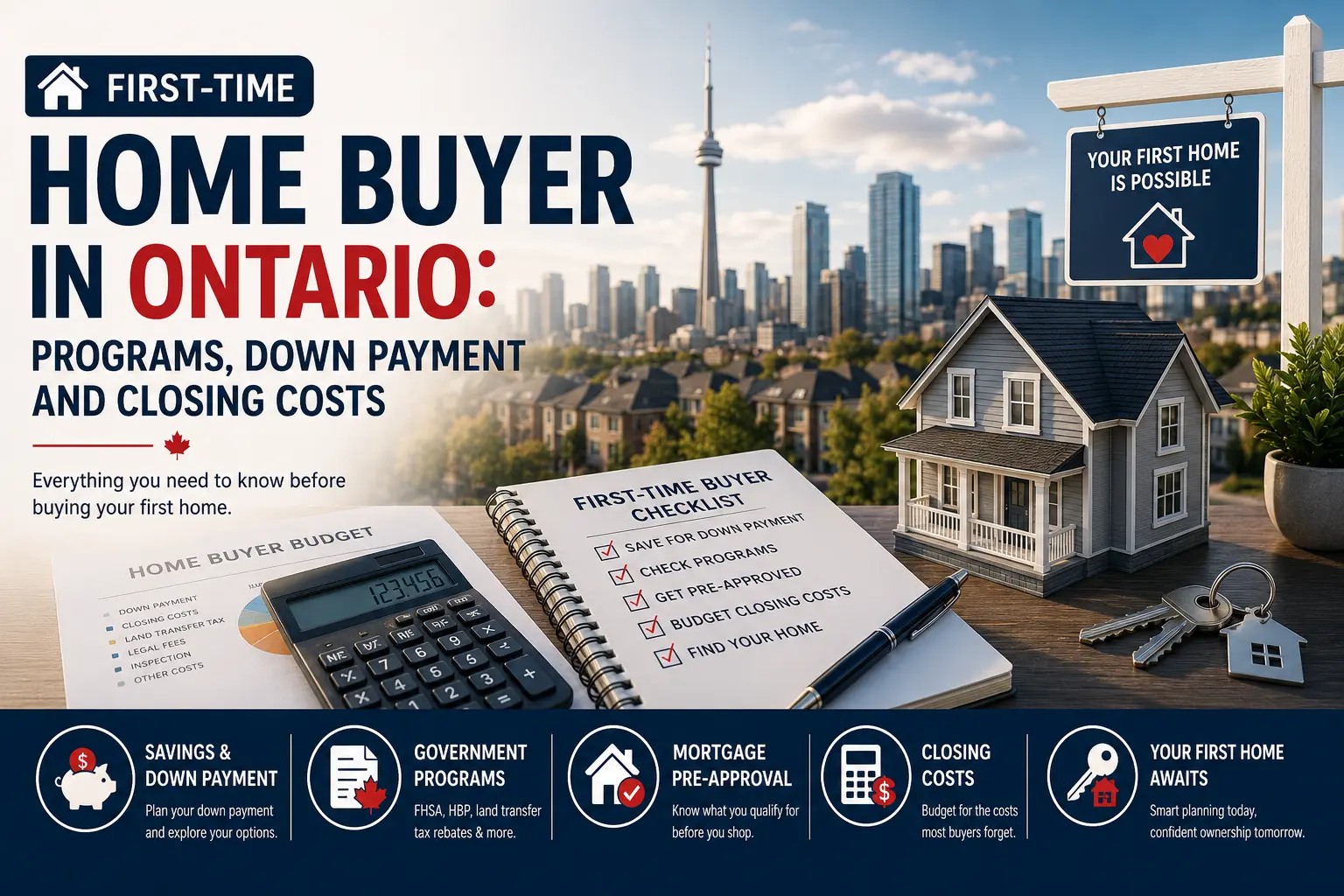
Buying your first home usually becomes real long before you receive the keys.
It may start when you open an FHSA, ask your parents whether they can help with the down payment, or begin checking listings in Toronto, Brampton, Mississauga or another Ontario market. At that stage, it is tempting to start booking showings immediately.
That is often the wrong first step.
Before viewing homes, a first-time home buyer in Ontario should know three numbers: the maximum mortgage they may qualify for, the amount of cash available for the purchase, and the monthly payment they can comfortably carry.
Those numbers are not always the same.
A lender may approve more than you want to spend. Your savings may cover the minimum down payment but not the closing costs. A home that looks affordable based on its listing price may become uncomfortable once property taxes, condo fees, utilities and maintenance are included.
Getting clear on the financing first makes the rest of the process easier—and reduces the risk of putting down a deposit on a property you cannot close.
What Should a First-Time Buyer Prepare Before Viewing Homes?
Before starting a serious home search, gather the documents a lender is likely to request and review your finances honestly.
Most buyers should be ready to provide:
- Government-issued identification
- Recent pay stubs
- An employment letter
- Two years of T4s or Notices of Assessment, where requested
- Statements showing the down payment and closing funds
- Details of loans, credit cards and lines of credit
- Information about any gifted funds
- Additional business documents if self-employed
The goal is not simply to obtain the largest pre-approval possible. It is to establish a realistic price range before emotion enters the picture.
A pre-approval can also identify problems early. An old credit-report error, an undocumented deposit or a car loan with a large monthly payment may reduce borrowing power more than expected.
Finding that out before making an offer is inconvenient. Finding it out after waiving a financing condition can be expensive.
Current First-Time Home Buyer Programs in Ontario
There is no single government program that solves affordability for every buyer. Instead, eligible purchasers may be able to combine several savings plans, tax credits and rebates.
First Home Savings Account
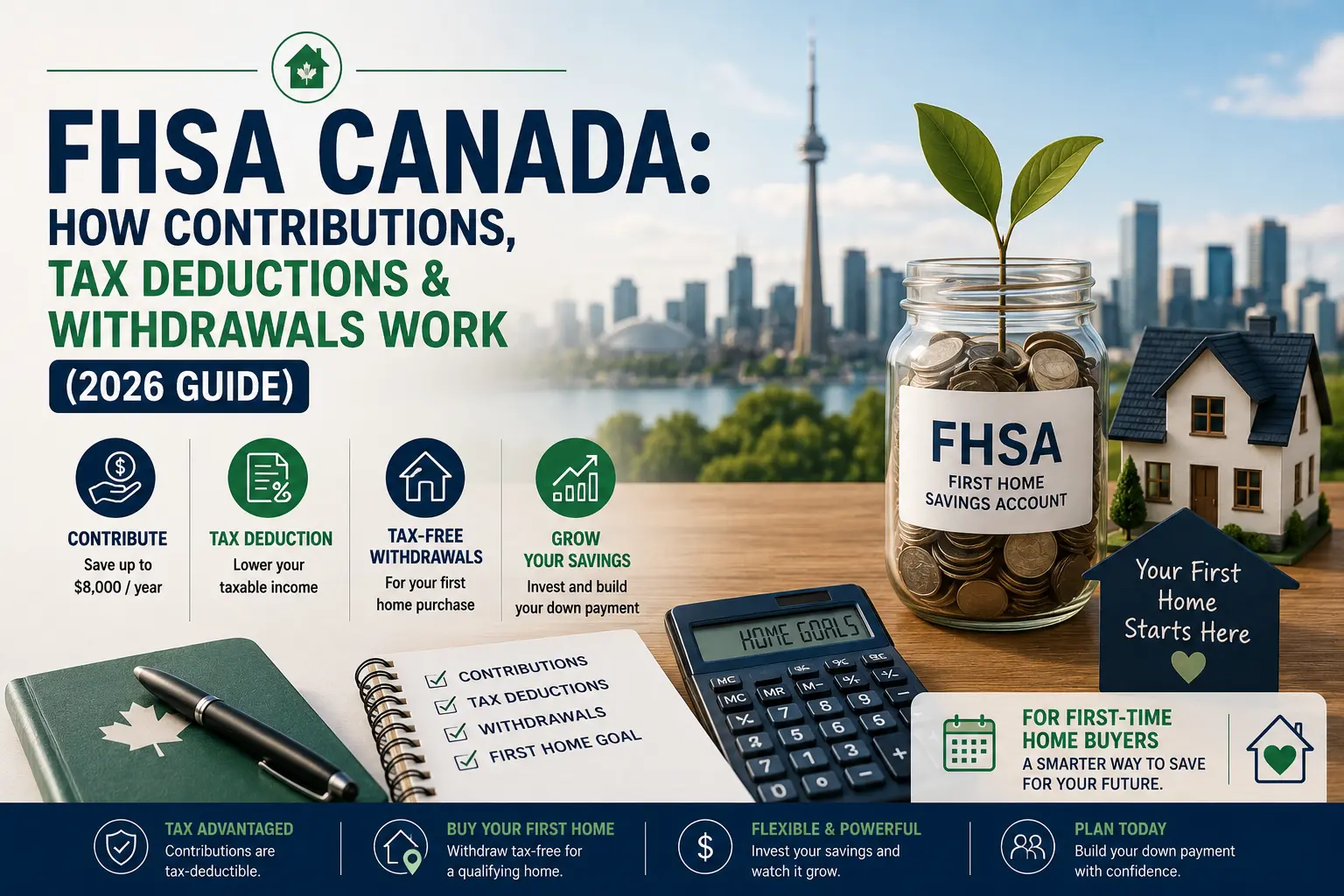
The First Home Savings Account, or FHSA, allows eligible Canadians to save for a qualifying first home.
Contributions are generally tax-deductible, while qualifying withdrawals can be made tax-free. Contribution room begins only after the account is opened, so someone planning to buy several years from now may benefit from opening an FHSA earlier rather than waiting until the purchase is close.
An FHSA can be particularly useful for buyers who want the tax deduction associated with an RRSP contribution without taking on the Home Buyers’ Plan repayment obligation.
Home Buyers’ Plan
The Home Buyers’ Plan allows an eligible buyer to withdraw money from an RRSP for a qualifying home without immediate withholding tax, provided the program rules are followed.
The HBP can be used for the same home as an eligible FHSA withdrawal. That may allow a buyer—or two eligible partners purchasing together—to combine a substantial amount of registered savings.
The HBP is not free money, though. Amounts withdrawn generally have to be repaid to an RRSP over time. Buyers should understand that repayment obligation before using retirement savings for the purchase.
For the complete eligibility and repayment rules, link this section to your existing Home Buyers’ Plan guide and RRSP first-time home buyer article rather than repeating those topics here.
Home Buyers’ Amount
Eligible buyers may also claim the federal Home Buyers’ Amount on their income tax return after purchasing a qualifying home.
This is a non-refundable tax credit. It can reduce federal tax payable, but it does not provide cash for the down payment or closing day.
That distinction matters. Buyers should not include a future tax credit when calculating how much cash they need to complete the purchase.
First-Time Home Buyers’ GST/HST Rebate for New Homes
Eligible first-time buyers purchasing, building or substantially renovating a new home may qualify for federal GST or HST relief.
This rebate applies to eligible new housing—not an ordinary resale home. The amount depends on the home’s value and the transaction date.
Ontario also introduced enhanced relief for the provincial portion of HST on certain eligible new or substantially renovated homes. These rebates can be valuable, but the agreement date, purchase price, intended occupancy and builder documentation all matter.
Buyers purchasing a pre-construction or newly built home should have the rebate treatment confirmed by their lawyer and tax adviser rather than assuming the advertised price includes every available rebate.
A Program That Is No Longer Open
The federal First-Time Home Buyer Incentive is no longer accepting applications.
Older articles may still describe the shared-equity program as an available option. It should not be included in a current first-time buyer plan or presented as an active source of down-payment assistance.
Minimum Down Payment Rules in Ontario
Ontario follows the federal minimum down-payment framework.
For an owner-occupied home priced at $500,000 or less, the minimum down payment is generally 5%.
For a home priced above $500,000 but below $1.5 million, the minimum is:
- 5% of the first $500,000
- 10% of the portion above $500,000
A property priced at $1.5 million or more generally requires at least 20% down because mortgage default insurance is not available above that price threshold.
Consider an $800,000 purchase:
- 5% of the first $500,000: $25,000
- 10% of the remaining $300,000: $30,000
- Minimum down payment: $55,000
That is 6.875% of the purchase price—not a flat 5%.
When the down payment is below 20%, mortgage default insurance is generally required. Its premium can usually be added to the mortgage, but Ontario sales tax charged on that premium must normally be paid as part of the closing funds.
For a full explanation of mortgage default insurance, link to your existing high-ratio mortgage article rather than duplicating it on this pillar page.
Can an FHSA, HBP and Gifted Down Payment Be Combined?
Potentially, yes.
An eligible buyer may use a qualifying FHSA withdrawal and an HBP withdrawal toward the same purchase. A lender may also accept a non-repayable financial gift from an eligible family member, subject to its policies and documentation requirements.
For example, a buyer’s funds could include:
- $30,000 withdrawn from an FHSA
- $25,000 withdrawn through the HBP
- $20,000 gifted by a parent
- $10,000 from regular savings
That would provide $85,000 before closing costs.
The source of every dollar still has to be documented.
A lender may request account statements showing the history of the savings, an FHSA or RRSP withdrawal record, and a signed gift letter confirming that the family contribution does not have to be repaid.
A common mistake is having a relative transfer a large amount shortly before closing without a clear paper trail. The money may be genuine, but unexplained deposits create extra questions and can delay approval.
Ontario and Toronto Land Transfer Tax Rebates
Most Ontario buyers pay provincial land transfer tax when purchasing a property.
Eligible first-time buyers may receive an Ontario land transfer tax refund of up to $4,000. Depending on the purchase price, that may eliminate the tax entirely or reduce the amount due.
Toronto buyers face an additional cost because the city charges its own municipal land transfer tax.
An eligible first-time purchaser in Toronto may receive a municipal rebate of up to $4,475. A qualifying Toronto buyer may therefore receive both the provincial and municipal rebates, but can still owe a significant balance on a higher-priced property.
The rebates are usually handled through the real estate lawyer at closing. Buyers should confirm their eligibility early, particularly when purchasing with someone who has owned a home before.
Closing Costs First-Time Buyers Often Forget
The down payment is only one part of the cash required.
Depending on the property and location, a buyer may also need money for:
- Provincial land transfer tax after any rebate
- Toronto municipal land transfer tax, where applicable
- Legal fees and disbursements
- Title insurance
- Home inspection
- Appraisal
- Provincial tax on the mortgage-insurance premium
- Property-tax and utility adjustments
- Moving expenses
- Immediate repairs or furnishings
New construction purchases may involve additional adjustments, development charges, occupancy fees or HST-related items. Those costs should be reviewed in the Agreement of Purchase and Sale by a lawyer before the deal becomes firm.
The deposit also causes confusion.
A deposit is usually paid shortly after the offer is accepted. It forms part of the total down payment; it is not normally an additional amount on top of it. However, buyers still need access to the deposit quickly, often before the lender has issued final approval.
Income, Credit and the Mortgage Stress Test
Mortgage approval is based on more than salary.
Lenders review the stability and type of income, existing monthly debts, credit history, property expenses and the size and source of the down payment.
Someone earning a strong income may still qualify for less than expected because of:
- Large car payments
- Credit-card balances
- Student loans
- Support obligations
- High condo fees
- Several financed properties
Self-employed income, bonuses, commissions and overtime may require a longer history or additional documentation.
Borrowers should also expect a mortgage stress test.
For an uninsured mortgage at a federally regulated lender, the current qualifying rate is the higher of the contract rate plus two percentage points or 5.25%. This means you may have to prove that you can afford a payment based on a rate above the one you will actually receive.
Passing the stress test does not mean the monthly payment fits your lifestyle. Lenders do not fully account for every household expense, such as childcare, commuting, support for family members or personal savings goals.
Approval is the lender’s ceiling. It should not automatically become your budget.
A Real GTA First-Time Buyer Scenario
Consider a first-time buyer purchasing an $800,000 resale home in Toronto with the minimum down payment.
Purchase funds
- Purchase price: $800,000
- Minimum down payment: $55,000
- Mortgage before insurance premium: $745,000
- Estimated mortgage-insurance premium at 4%: $29,800
- Estimated Ontario tax on that premium: $2,384
The insurance premium may generally be added to the mortgage. The $2,384 provincial tax normally cannot.
Estimated closing costs
- Ontario land transfer tax after the maximum first-time buyer refund: approximately $8,475
- Toronto municipal land transfer tax after the maximum first-time buyer rebate: approximately $8,000
- Legal fees, title insurance and disbursements: approximately $2,200
- Home inspection: approximately $600
- Appraisal allowance: approximately $500
- Tax on mortgage-insurance premium: approximately $2,384
Estimated cash required
- Down payment: $55,000
- Estimated closing costs: $22,159
- Total estimated cash needed: approximately $77,159
Any deposit already paid would be credited toward the $55,000 down payment.
This is an illustration, not a closing statement. Legal costs, tax adjustments, appraisal requirements, insurance premiums and other expenses vary by transaction. Buyers should also keep an emergency reserve instead of using every available dollar to close.
Mistakes That Delay Approval or Put the Deposit at Risk
The most dangerous first-time buyer mistakes usually happen before closing.
Making an Offer Before Confirming Financing
A calculator result is not a mortgage approval. Lender review may uncover income, credit or property issues that the buyer did not anticipate.
Waiving the Financing Condition Too Quickly
A pre-approval is generally conditional. The lender still has to approve the property and verify the final documents.
Moving the Down Payment Between Accounts Repeatedly
Frequent transfers make the source of funds harder to follow. Keep statements and transfer records whenever money is moved.
Taking On New Debt Before Closing
Financing furniture, leasing a vehicle or increasing credit-card balances can change the debt ratios after approval.
Changing Employment Without Reviewing the Mortgage
A move from salaried employment to probation, contract work or self-employment may affect the lender’s decision.
Spending the Closing-Cost Reserve
Having exactly enough for the down payment is not enough. The lawyer needs the remaining funds before closing, and unexpected adjustments can arise.
First-Time Buyer Pre-Approval Checklist
Before viewing homes seriously, confirm that you have:
- Reviewed your credit report
- Calculated the documented down payment
- Set aside funds for closing costs
- Collected income documents
- Identified all monthly debts
- Discussed any employment changes
- Documented gifted funds
- Established a comfortable monthly budget
- Compared insured and uninsured mortgage options
- Understood the conditions attached to the pre-approval
A useful pre-approval should tell you more than the maximum purchase price. It should explain the likely monthly payment, required cash, qualification risks and documents still outstanding.
First-Time Home Buyer Ontario FAQs
How Much Mortgage Can I Qualify for in Ontario?
Qualification depends on income, debts, credit, down payment, property taxes, heating costs, condo fees and the applicable stress-test rate.
Two households with the same income may qualify for very different amounts if one has larger debt payments or is purchasing a property with high monthly fees.
Do First-Time Buyers Need 20% Down?
No.
An eligible buyer may purchase an owner-occupied home below $1.5 million with less than 20% down, subject to lender and mortgage-insurer approval. Mortgage default insurance is generally required when the down payment is below 20%.
Can My Family Help With the Down Payment?
Many lenders accept a non-repayable gift from an eligible family member.
The lender will usually require a signed gift letter and evidence showing the transfer of funds. A repayable family loan is different and may need to be included in the buyer’s debt obligations.
Can I Use Both My FHSA and RRSP?
An eligible buyer may make a qualifying FHSA withdrawal and use the HBP for the same qualifying home, provided all conditions for both programs are met.
Do I Qualify as a First-Time Buyer if My Partner Owned a Home?
Possibly, but the answer depends on the specific program.
The FHSA, HBP, land transfer tax rebates and tax credits do not all use identical eligibility tests. Ownership and occupancy history for both partners should be reviewed before assuming a rebate or withdrawal is available.
Is the First-Time Home Buyer Incentive Still Available?
No. The shared-equity First-Time Home Buyer Incentive stopped accepting new applications in 2024.
Request a First-Time Buyer Mortgage Plan
A first-time buyer does not need another generic affordability number.
You need a plan showing the price range, expected monthly payment, minimum down payment, closing costs and documents required for approval.
Team Done Mortgage can review your income, savings, debts and target location before you begin making offers.
Request a first-time buyer mortgage plan and find out what a realistic purchase could look like based on your numbers.