Saving for a first home has never been easy, particularly in Ontario where home prices remain well above the national average. For many buyers, building a down payment takes years of careful planning.
Table of Contents
That’s exactly why the First Home Savings Account (FHSA) was introduced.
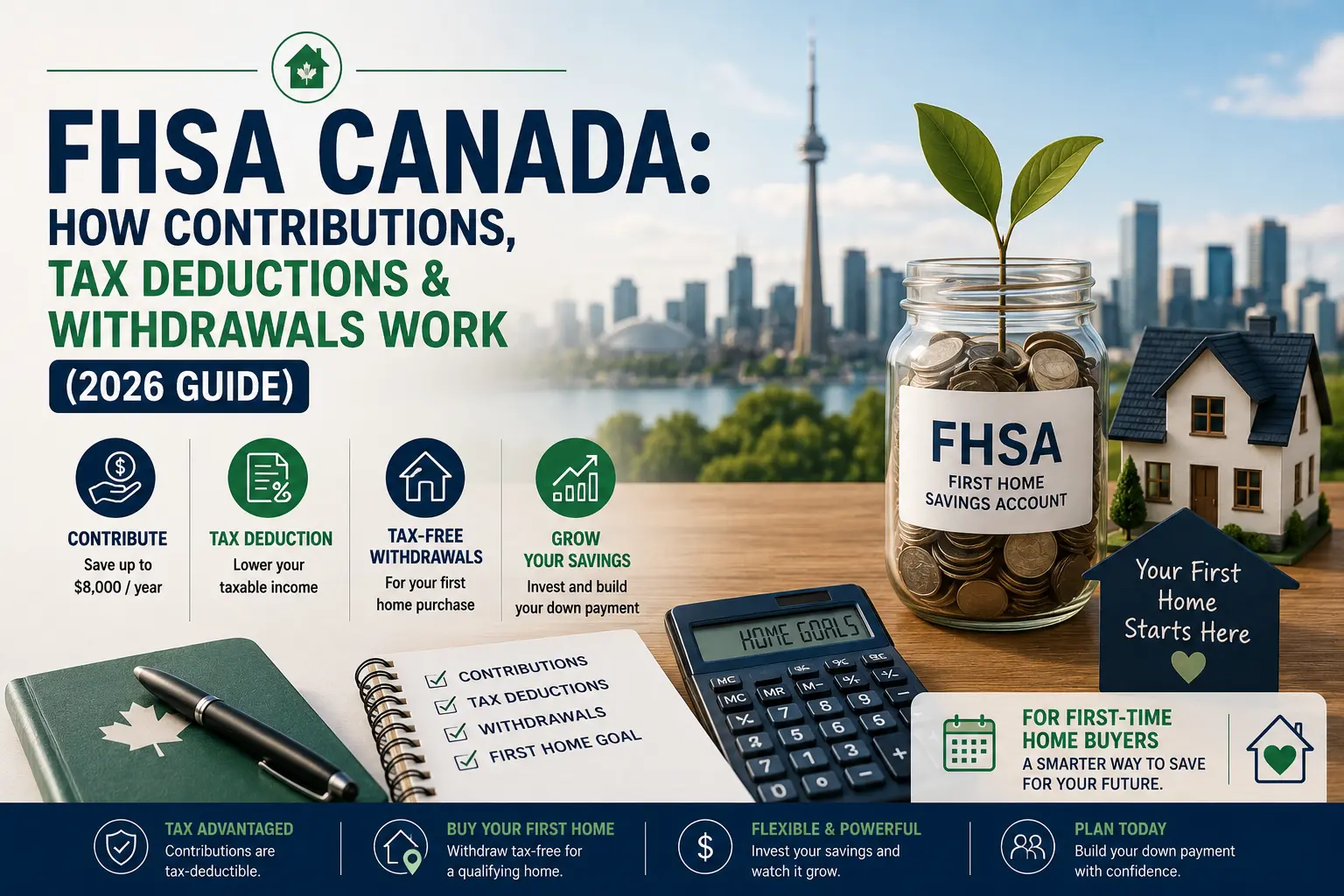
The FHSA combines two benefits Canadians were previously forced to choose between. Like an RRSP, contributions can generally reduce your taxable income. Like a TFSA, qualifying withdrawals used to purchase your first home are tax-free.
For someone planning to buy their first property within the next few years, that combination can make a meaningful difference.
Understanding how the FHSA works—and avoiding common mistakes—is just as important as opening the account itself.
What Is an FHSA?
The FHSA Canada program is a registered savings account designed specifically for eligible first-time home buyers.
It allows Canadians to save for their first home while receiving valuable tax advantages along the way.
Unlike a regular savings account, money contributed to an FHSA may reduce your taxable income for the year. If you later use those funds to buy a qualifying home, your withdrawal is generally tax-free.
That means eligible buyers may receive both:
- A tax deduction when contributing
- A tax-free withdrawal when purchasing
Very few registered accounts offer both benefits together.
Who Can Open an FHSA?
You may be eligible to open an FHSA if you:
- Are at least 18 years old (or the age of majority in your province)
- Are a Canadian resident for tax purposes
- Have a valid Social Insurance Number
- Qualify as a first-time home buyer under the FHSA rules
Being a first-time buyer doesn’t necessarily mean you’ve never owned property.
Eligibility depends on whether you occupied a home that you or your spouse or common-law partner owned during the relevant qualifying period.
Because individual situations differ, it’s worth confirming your eligibility before opening an account.
FHSA Contribution Limits
One of the most common questions buyers ask is:
How much can I contribute?
For 2026, the current limits are:
- Annual contribution room: $8,000
- Lifetime contribution room: $40,000
Contribution room begins only after you open an FHSA.
That’s why many financial planners encourage eligible buyers to open the account early—even if they don’t plan to contribute immediately.
Waiting several years to open an FHSA could mean losing contribution opportunities that cannot be recovered.
Carry-Forward Rules
Unlike some registered accounts, unused FHSA contribution room does not accumulate indefinitely.
Eligible account holders may carry forward up to $8,000 of unused contribution room into the following year.
Here’s an example.
Sarah opens an FHSA in 2026 but contributes only $3,000.
She has:
- $5,000 unused contribution room
- Up to $8,000 eligible to carry forward
In 2027, she could contribute:
- New annual room
- Plus eligible carried-forward room
Understanding these rules can help buyers maximize deductions before purchasing.
How FHSA Tax Deductions Work
Contributions made to an FHSA are generally tax-deductible.
Suppose your taxable income is $95,000.
If you contribute $8,000 to your FHSA, your taxable income may be reduced to $87,000, depending on your overall tax situation.
That deduction can potentially generate a tax refund, which many buyers choose to reinvest toward their future down payment.
Unlike an RRSP, however, FHSA withdrawals for a qualifying home purchase generally do not have to be repaid.
What Counts as a Qualifying Withdrawal?
A qualifying withdrawal is generally tax-free if the FHSA rules are satisfied.
Typically, buyers must:
- Purchase or build a qualifying home
- Intend to occupy it as their principal residence
- Meet the FHSA eligibility requirements at the time of withdrawal
Qualifying homes may include:
- Detached houses
- Semi-detached homes
- Townhouses
- Condominiums
- Certain mobile homes
- Some newly constructed properties
If the withdrawal doesn’t meet the qualifying conditions, it may become taxable.
Understanding the timing requirements before withdrawing funds is essential.
Can You Use an FHSA and the Home Buyers’ Plan Together?
Yes.
Many first-time buyers choose to combine both programs.
An eligible buyer may use:
- Tax-free FHSA withdrawals
- RRSP withdrawals through the Home Buyers’ Plan (HBP)
for the same qualifying home purchase.
Doing so can significantly increase the funds available for a down payment.
Rather than repeating the HBP rules here, see our complete guide:
Internal Link: Home Buyers’ Plan (HBP): Complete Guide
What If Your Spouse Already Owns a Home?
This is one of the most misunderstood FHSA questions.
Whether you’re considered a first-time buyer depends on the specific FHSA eligibility rules—not simply whether your spouse owns property today.
For example, if your spouse owned and occupied a home during the relevant period, that could affect your eligibility.
Because family circumstances vary, buyers should confirm their situation before relying on FHSA contribution or withdrawal rules.
What Can You Invest in Inside an FHSA?
An FHSA isn’t limited to cash savings.
Depending on your financial institution, investments may include:
- Cash
- High-interest savings
- Guaranteed Investment Certificates (GICs)
- Mutual funds
- Exchange-Traded Funds (ETFs)
- Individual stocks
- Bonds
The right investment depends largely on your expected purchase timeline.
Someone buying within one year may prioritize capital preservation.
Someone planning to purchase five years from now may consider investments with greater growth potential while accepting additional market risk.
Example: Building a Down Payment Over Three Years
Consider Alex, who plans to buy his first home in 2029.
Year 1
FHSA contribution: $8,000
Year 2
FHSA contribution: $8,000
Year 3
FHSA contribution: $8,000
Total contributions:
$24,000
If those investments generate additional returns, Alex could have an even larger tax-free amount available for his down payment, depending on investment performance.
Meanwhile, each annual contribution may also provide valuable income tax deductions.
Timing Mistakes That Can Create Tax Problems
The biggest FHSA mistakes usually involve timing rather than investing.
Common errors include:
Withdrawing Before Qualifying
Not every home purchase automatically qualifies.
Review the FHSA withdrawal rules before requesting funds.
Missing Required Deadlines
Certain transactions require withdrawals to occur within specific timeframes.
Waiting too long could affect tax treatment.
Closing the Account Too Early
Some buyers close their FHSA before completing the purchase process.
Always understand the sequence required for your transaction.
Assuming Every Withdrawal Is Tax-Free
Only qualifying withdrawals receive tax-free treatment.
If the conditions aren’t met, taxes may apply.
Documents a Mortgage Lender May Request
If FHSA funds are being used toward your purchase, lenders commonly request evidence showing the source of your down payment.
Depending on your situation, documents may include:
- FHSA account statements
- Recent transaction history
- Withdrawal confirmation
- Bank statements showing funds deposited
- Gift letter (if combined with gifted funds)
Maintaining a clear paper trail helps avoid unnecessary delays during mortgage approval.
FHSA Canada FAQs
Can I Transfer Money From My RRSP Into an FHSA?
Certain direct transfers may be permitted under CRA rules, although different tax considerations can apply. Buyers should confirm the implications with their financial institution or tax professional before transferring registered funds.
What Happens If I Never Buy a Home?
If you ultimately decide not to purchase a qualifying home, your FHSA doesn’t automatically disappear.
Depending on your circumstances and applicable rules at that time, you may have options such as transferring eligible funds to an RRSP or RRIF without immediate tax consequences, subject to CRA requirements.
Can I Have More Than One FHSA?
Yes.
You may hold multiple FHSA accounts with different financial institutions.
However, the overall annual and lifetime contribution limits apply across all accounts combined.
Does an FHSA Affect Mortgage Approval?
The account itself doesn’t improve mortgage approval.
However, having a larger documented down payment can improve your financing options and reduce the amount you need to borrow.
Is an FHSA Better Than an RRSP?
They serve different purposes.
Many first-time buyers benefit from using both programs together rather than choosing only one.
Planning to Buy Your First Home?
An FHSA can be one of the most valuable tools available to first-time home buyers—but only if it’s used strategically.
Opening the account early, understanding contribution limits, documenting your savings, and coordinating your FHSA with other available programs can strengthen your overall home-buying plan.
If you’re preparing to purchase your first property, Team Done Mortgage can help you understand how your FHSA fits into your down payment strategy and mortgage qualification before you begin house hunting.
Internal links to add
- First-Time Home Buyer in Ontario
- Home Buyers’ Plan (HBP)
- RRSP First-Time Home Buyer Rules
- High-Ratio Mortgage Insurance
- Mortgage Pre-Approval Guide
External links
- CRA – First Home Savings Account (FHSA)
- Canada.ca – FHSA eligibility and contribution rules
- CMHC – Home Buying Resources